Autism is an often-misunderstood condition that manifests in different ways in different people. CHD’s new Autism Spectrum Disorder (ASD) Outreach Program fosters inclusion and provides practical tools to enhance the lives of the individuals we serve.
The independent supported living program for adults with autism is an offshoot of CHD’s Outreach Program, which traditionally assists adults with developmental and intellectual disabilities.
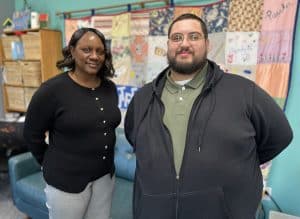
This new ASD Outreach Program began last July and serves seven clients, most of whom live in the same apartment complex in their own apartments in West Springfield.
Generally, the presentation of ASD varies greatly—it is characterized by restricted or repetitive behaviors, and it includes a wide range of challenges and strengths. The idea of the ASD Outreach Program is to develop strategies for autonomous living for individuals who are neurodiverse needing support with independent living skills, social skills, and their unique needs. The individuals served by this pilot program receive supports that enable them to thrive and achieve their potential.
From making healthy meals to managing money, the program helps residents develop self-reliance and the social network necessary to live on their own with 5 to 10 hours a week of staff support, depending on level of need. In the first few months, skills assessments are conducted, and services are developed through a person-centered planning process—a “life plan” that is a proactive, forward-looking roadmap, according to Outreach Program Director Shannon Veasley. “Their life plan is reviewed every year in a meeting in which we go over their vision for the year and a set of goals to work on,” she said.
In-home safety assessments are conducted several times a year. “This involves making sure that smoke detectors are working, that all egresses are clear, and everything in the apartment is in working order, including the stove and the microwave,” she said. Community safety assessments are also completed to ensure safe, independent community access. Case management is provided to help with generic entitlements such as Social Security, MassHealth, and Medicaid. “We also support them with transportation to doctor and dental appointments, grocery shopping, etc.” said Veasley.
In addition, the ASD Outreach Program helps connect clients to other CHD clinical services. Clients also enjoy social activities, including movie nights, two to three days a week, and there are trips to such places as Vermont, Mystic, CT, Rhode Island, and the New Jersey Shore, as well as a spring dance, and a summer picnic at Mittineague Park in West Springfield.
These activities, including playing digital games—a favorite of several clients—help them develop social skills, confidence, and a close social network. “They’ve gotten to know one another fairly well,” said Outreach Case Manager Jeremmy Torres, a registered behavior technician in our Outreach Program. “They celebrate birthdays together and go to the movies together—they really have built a bond.”
Torres said one of the challenges of starting such a program from scratch is determining the specific supports clients should receive. Some need to be taught budgeting and other skills, including meal planning and prep.
“One client, for example, is very impulsive when it comes to spending money,” said Torres, who works with CHD Counselor Laura Scott, a board-certified behavior analyst, on positive behavior support plans to promote safe and healthy behavior.
“Some of the individuals enjoy socializing, but others tend to isolate a bit more and prefer interacting with smaller groups,” said Veasley. Several clients drive their own cars. For those who don’t drive, program staff help them learn how to navigate the bus system.
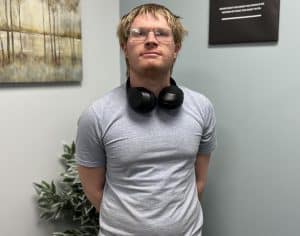
Tyler Scott Butzer, a 27-year-old client, said that CHD staff helps him with grocery shopping, cleaning, and reminds him to do his laundry. “I put off doing my laundry and it builds up,” he said with a laugh. He lives in an apartment in Palmer, and works as a carpenter at Prospect Meadow Farm in Hatfield, which provides employment for people with intellectual disabilities and those with autism. Butzer doesn’t drive, and he has no desire to. “There’s no medical reason I don’t have a license,” he said. “I just don’t feel comfortable behind a wheel.” This is why transportation provided by the program is crucial.
CHD’s ASD Outreach Program also works with the state Department of Developmental Services to enroll clients in job training programs. The goal is to empower them to lead more active lives and support their journey toward self-sufficiency, with the next step of having them apply for public housing.
“The program helps give these people a sense of normalcy, belonging, and individuality,” said Torres. “Some of our clients weren’t diagnosed with ASD until they were older, so for a long time they haven’t enjoyed the opportunities they should have had. We want to help set them up for success.”
Vice President of Disability & Elder Services Tammy Nothe-Hebert said that this initiative is the first independent living experience for the majority of the individuals. “These seven individuals are all doing well and report being happy with their support from CHD,” she said. “It is rewarding to see them begin their independent living journey and the positive impact it has on their lives. It is wonderful to see them grow and flourish with their independence and abilities.”