 Art therapy can be valuable in helping those dealing with depression, anxiety, trauma, and addictions, according to several studies. This treatment approach has long been recognized as beneficial to mental health clients, especially in the decades since the term “art therapy” was first used by author Adrian Hill in 1942 after recovering from tuberculosis in a sanatorium, where “the simple act of drawing” helped him relieve stress. He wrote the book “Art Versus Illness” three years later.
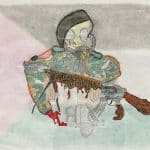
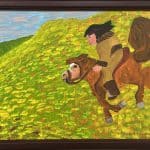
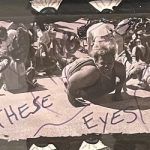
CHD’s STAR Psychiatric Day Treatment program on State Street in Springfield effectively uses art therapy to complement its outpatient therapy services and mental health treatment groups. Last month, STAR was well-represented at an art show sponsored by the National Alliance on Mental Illness of Western Massachusetts (NAMI) at the Chicopee Public Library. The exhibit showcased more than 100 art and poetry creations from people in the Springfield area, and displayed several pieces by CHD clients, including Ron Gauthier, Rejine Caraballo, Kaiser Martin, Kenneth McLaurin, Annabelle Rosario, Casey B., Giovanni R., Dante R., Carmen S., Anne P., Zaina Abdul-Hakim, April B., Karla W., and Donald W.
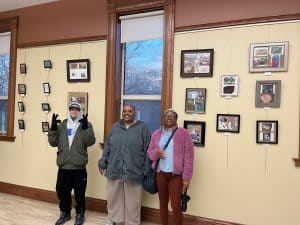
CHD client artists and staff attended the artist reception, and there was a later field trip of CHD participants to see their work.
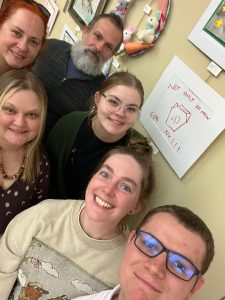 Viewing their artwork on display was both empowering and exciting for participants. “There’s something about working hard on something and then being able to show it off to those around you in the community, said STAR Clinician Rachel Gustafson, who leads art therapy groups. “Participants have become very enthusiastic to explore their emotions and express them through art. There is a lot of art making in the program, and clients have been able to explore new mediums and materials.”
Also, one of the biggest challenges to people living with mental illness is isolation, and art therapy reduces this feeling. “Art therapy can be used as a communication tool with participants because sometimes talking is difficult, so using a tool, like art, can invite verbal and visual communication through the pieces the participants create,” said Gustafson.
McLaurin’s artwork in the show was based on the news coverage and photos he remembered seeing of the Capitol Crawl in 1990—a pivotal moment in the disability rights movement when activists abandoned their mobility aids and crawled up the steps of the US Capitol to demand passage of the Americans with Disabilities Act.
“Through my art I aim to convey the strength, courage, and resilience of those moments, and to share that feeling with others,” he said. “I create art for a better way of seeing the world, and I hope my work inspires positive change for everyone. I have been making art since kindergarten, and for me it is a place of peace—a quiet moment that nurtures the mind and spirit. My goal is to communicate meaningful messages while providing a space for reflection and understanding.”
Caraballo is a relative newcomer to the artistic process—she began producing art in 2023. “I am drawn to bold, beautiful colors, especially metallic blue, rose gold, orange, and burgundy,” she said. “Certain projects catch my interest because they connect with my spirit, and I enjoy exploring how colors and designs can come together to express something meaningful.”
For Caraballo, art is a way to relax and center herself. “It gives me peace while also allowing me to share joy with others,” she said. “My hope is that people not only enjoy my art but also feel happiness when they experience it. Creating art is about connection, expression, and finding beauty in the process.”