Being Open and Honest is Key
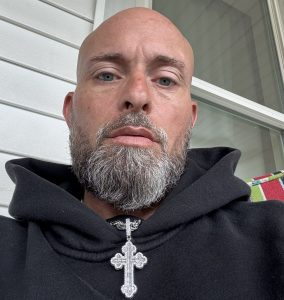 Mike Kanerva followed his mother’s footsteps—right into alcohol use disorder. But he didn’t know his mother had an addiction until he was older. “My grandfather, who kind of took custody of me, sheltered me from that,” he said.
In retrospect, however, all the signs were there. His mother drank her “soda.” A lot. One day, when he was a child, Kanerva came home from a Wiffleball game, and he was thirsty. “My mom had a nice glass of soda—what I thought was soda—and I picked it up, took a few sips, and I knew it wasn’t soda, and that it was not for me, and I put it back down,” he recalled.
“I didn’t really think anything of it. My mom didn’t scold me or anything—there was no real reaction. I did it a few more times afterwards, and there was no reaction. No reprimand. So it became kind of second nature for me, and it became more frequent.”
Kanerva, a native of Lenox, MA, also has depression and PTSD, among other mental health conditions, which ultimately are rooted in the trauma of discovering his father’s body after he died of suicide. Kanerva was five years old at the time. He credits Mary Loomis, program director of CHD’s Easthampton Outpatient Behavioral Health Clinic, with helping him get to the bottom of his problems. “Even if I took drinking away, there are so many other issues that needed to be addressed—ones that would have taken me back to drinking,” said the Marine Corps veteran. “She has shed some light on these issues.” She also urges him to confront his behavior. “I had learned to avoid—to use defense mechanisms—when things got tough, but she calls me out on my [crap], and now I’m learning to call myself out on it. If you’re not open and honest, you’re not only wasting your time, you’re wasting your therapist’s time.”
A year ago, he entered a six-month recovery program at the Salvation Army Adult Rehabilitation Center in Springfield, and now he is a supervisor in the Salvation Army warehouse on Liberty Street. Even after becoming homeless, it still wasn’t an easy decision for him to seek treatment. “My life had fallen apart,” he said. “But as a Marine, we don’t ask for help, and it was difficult for me to finally say, ‘I can’t do this.’ I thought, ‘Maybe someone else can help me, because I can’t. This isn’t working.’ The revolving door of life was becoming unmanageable. I would look around, and see people who had their act together, and I asked myself, ‘How do I get there?’”
He is happy to share his story, and he has talked about his journey with fellow workers at the Salvation Army warehouse. “Some of them are having a tough time, and I pull them aside and explain to them that I went through the program and that I know this is difficult,” he said. “I tell them, ‘It’s going to be hard. You don’t know hard you have worked to create this addiction, so you’re not going to overturn this overnight. You’ve got to be willing to put in the work.’’’
At present, Kanerva is also a student at Springfield Technical Community College studying to be a therapist, with the goal of eventually getting his bachelor’s degree at Westfield State University. “My life is nowhere near what I wanted it to be, but it’s a million times better than what it was,” he said. “The past is the past. I can’t live there, and I can’t let it define me.”