Writing a Goodbye Letter to Alcohol
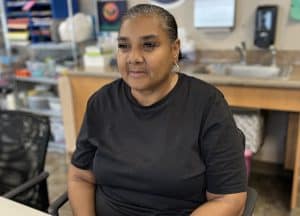 Drinking alcohol used to make Sandra feel like Wonder Woman. “I felt like I could achieve anything and everything,” she said.
A resident of Aster House, CHD’s residential recovery home in South Hadley since September, Sandra felt less like a superhero, however, when she went to the “ugly places” her alcohol use disorder took her, including stripping and prostitution.
“I wasn’t achieving anything,” said the 61-year-old. “I was losing out—losing out on my family, my children, my pride, and my loving nature.”
Sandra, who grew up in Springfield, began drinking when she was eight years old. “My parents would have a party, and there was stuff at the bottom of cups I’d find. I’d drink it, and get a little tipsy,” she said. “I didn’t know it was going to be a bomb that would explode later on in my life.”
At 18 she was drinking every day. At 24 she sought help, and she did have periods of sobriety that lasted four years and seven years. Nonetheless, she still went back to hard alcohol—vodka, gin, or whiskey, which was her favorite. “I got cocky in my sobriety—I stopped going to therapy,” she said. She had completed detox, 21-day programs, and 28-day programs, but nothing ever stuck. “This is the longest program I’ve ever been in,” she said, and it probably saved her life, because she had aortic stenosis that required open heart surgery to replace a valve last November. “When you’re drinking, you’re not listening to your body. You don’t go to the doctor. You’re looking how to get money to buy alcohol.”
Her stay at Aster House, where she participates in therapy groups, has been “a very humbling, educational experience. I don’t have the compulsive urge to drink. I have a very good relationship with my children now. I go to meetings on a daily basis and I found a sponsor.”
Her latest activity was writing a goodbye letter to alcohol. “It’s an intense letter, because I saw everything I had lost—my relationships, my self-respect, and my self-worth. It all went out the window because of alcohol,” she said. “I wrote, ‘I don’t need you anymore.’”
Sandra knows that when she graduates from the program, that’s when the real test will come—being on her own and using the coping skills she learned at Aster House. “I will continue to chase recovery like I chased the bottle,” she said. “I will take the energy that I had for something negative and channel it into something positive.”