Tackling a Complex Problem
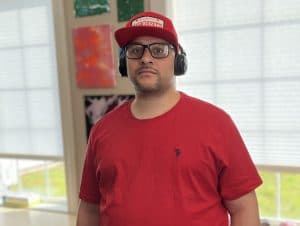 Joey has been at Aster House in South Hadley for five months—the second time he has stayed at a residential recovery home. “This isn’t my first rodeo,” he said. “The first time didn’t stick. But I’m more ready this time around.”
Indeed, relapse is often a part of the recovery process, often indicating that adjustments need to be made to the client’s recovery plan. Residents can live at Aster House up to one year, and Joey plans to do just that. “The more time I spend here, the better off I’m going to be when I get out,” he said. “It’s providing me with a safe environment to work on my addiction and strengthen my recovery.”
Joey’s heroin and cocaine use cost him everything. “I lost my money, my car, and all my material possessions,” he said. He is from Springfield, but grew up in Boston’s Dorchester neighborhood in a dysfunctional family. “Both of my parents were addicts,” he said. “My father was a crack cocaine user, and my mother was addicted to heroin. There was never any food in the house—no clothes. I have a lot of trauma from a difficult childhood—trauma that I’m still working through.”
To be sure, trauma is frequently a major driver behind substance use disorders, and many people with these issues have co-occurring mental health disorders as well. Joey also has schizophrenia, and the care provided at Aster House is based on Co-occurring Enhanced Residential Rehabilitation Service (COE-RRS), an innovative treatment program that is part of a statewide effort to address the addiction crisis in Massachusetts.
Joey is well aware that getting at the root causes of his addiction means tackling a complex problem with many layers that must be addressed one by one to achieve true healing. “It takes years to develop an addiction, so you have to peel it back like an onion,” he said.
Before he was referred to Aster House, Joey had visited CHD’s Gateway Community Behavioral Health Center in Chicopee several times in crisis. “I was having these meltdowns, and the nursing team there was exceptional—amazing,” he said. He had an interview with Aster House Clinical Director Courtney Supple, and was accepted into the program.
“I was excited when I got here,” he said. “Elated. And the excitement hasn’t left. The staff is always on-point, kind and compassionate. They really care about us.”
Joey enjoys taking part in Aster House’s daily clinical, behavioral, and recovery treatment groups. ‘It’s a very structured environment—we know what’s going to happen from day to day—but we also have some flexibility.” He particularly likes the program’s meditation and yoga sessions. “We have outings every Friday—we go to the beach, miniature golf, bowling—you name it.”
What would he say to anyone else in his shoes who is struggling like he was, but may be reluctant to seek help? “There are people who will help you get through it—you’re not alone,” he said. “And a place like Aster House is personalized to fit your needs. It’s challenging at times, but it’s a good challenge. One thing I’ve learned is that you definitely need to be challenged—and at the same time supported—and they do that well here.”